Best Whale Alert Alternatives in 2026
The best Whale Alert alternatives do more than track large transfers. They help teams monitor wallets, contracts, liquidity, governance, and protocol risk in one workflow.
Direct answer
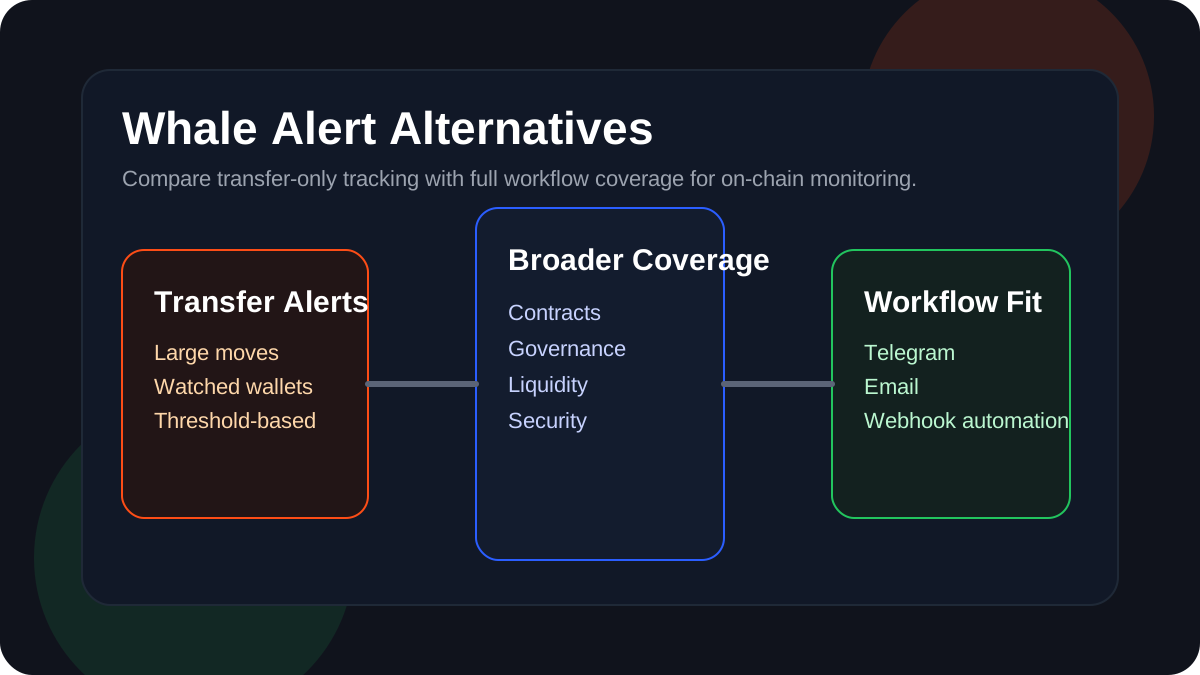
The best Whale Alert alternatives in 2026 combine wallet tracking with smart contract monitoring, DeFi liquidity alerts, governance coverage, and workflow routing through Telegram, email, or webhooks. If you only need large transfer alerts, simple wallet tracking may be enough. If you need operational visibility, you need broader on-chain monitoring.
Introduction
Transfer alerts are still useful, but they are no longer enough for most serious on-chain workflows.
Traders, DAO operators, protocol teams, and researchers increasingly need a monitoring stack that can track more than a wallet sending a large amount of tokens.
What To Look For In A Whale Alert Alternative
- Wallet tracking with thresholds and counterparty awareness
- Smart contract event monitoring, not just transfer tracking
- Coverage for governance, liquidity, and security workflows
- Delivery to Telegram, email, and webhooks
- Support for multiple chains instead of a single-network view
When Basic Transfer Alerts Are Enough
If your workflow only needs to know when a few wallets move funds above a threshold, a simple wallet tracker may be enough.
That usually fits individual traders, smaller research workflows, or a narrow single-token watchlist.
When You Need Broader Monitoring
A broader platform becomes necessary when the same team needs to monitor more than transfers.
- A DAO needs proposal and treasury alerts as well as whale tracking
- A protocol team needs upgrade, admin, and liquidity monitoring in one place
- A security workflow needs suspicious wallet, bridge, and contract-event coverage
A Simple Comparison Framework
- List the exact entities you need to monitor: wallets, contracts, pools, bridges, or governance systems
- Check which alert channels your team actually uses
- Evaluate whether the tool supports thresholds and filters that reduce noise
- Make sure the tool matches your chain coverage and operational workflow
Which Workflows To Test First
Start with one wallet workflow from this wallet monitoring guide, then add one contract workflow from this smart contract alert guide. If both fit your needs in one system, the platform is likely a better alternative than transfer-only tooling.
Try Pulsiv
Move beyond transfer-only alerts
Monitor wallets, contracts, governance, and liquidity in one workflow instead of stitching together isolated signals.
FAQ
Frequently asked questions
Short answers to the common questions people ask when evaluating on-chain alerts and blockchain monitoring tools.
What makes a good Whale Alert alternative?
A strong alternative supports wallet tracking, contract monitoring, useful filters, multiple chains, and alert delivery into the channels your team already uses.
Are whale transfer alerts enough for most teams?
Usually not. Most teams also need contract, liquidity, governance, or security monitoring to understand why capital is moving.
Should traders care about contract alerts too?
Yes. Contract events and liquidity changes often explain or reinforce the wallet activity traders notice first.
What is the simplest way to compare tools?
Compare them against your real workflows: which entities you monitor, which thresholds matter, and which alert channels your team actually uses.
Related articles
More on blockchain monitoring
Related guide
How to Monitor a Crypto Wallet in Real Time (No Code)
See what a practical wallet monitoring workflow should look like before comparing tools.
Related guide
How to Set Up Ethereum Smart Contract Event Alerts
Contract coverage is one of the biggest differences between transfer-only tools and broader monitoring platforms.
Related guide
What Is an On-Chain Alert? (And Why Traders Use Them)
Use this primer if you want a clearer model for how different alert types fit together.