What Is an On-Chain Alert? (And Why Traders Use Them)
On-chain alerts turn live blockchain activity into useful notifications, so traders, developers, and crypto teams can react without constantly watching block explorers.
Direct answer
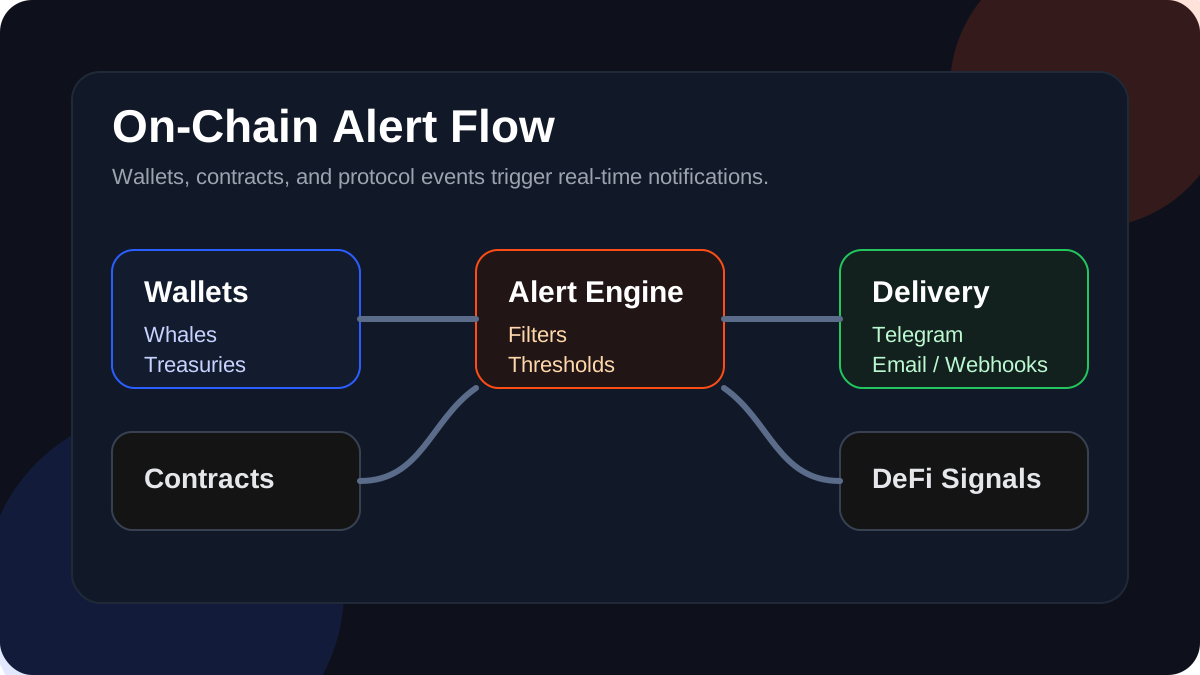
An on-chain alert is a real-time notification triggered by a blockchain event such as a wallet transfer, smart contract call, token mint, or liquidity change. Traders, developers, and crypto teams use on-chain alerts to react faster without manually watching block explorers.
Introduction
Blockchains are transparent by design, but transparency alone does not make data useful.
Every wallet movement, token mint, governance proposal, and contract event happens publicly on-chain. The challenge is turning that constant flow into a signal you can act on quickly.
That is why on-chain alerts matter. Instead of manually refreshing explorers or maintaining custom scripts, you define what matters and receive a notification when it happens.
What Is an On-Chain Alert?
An on-chain alert is a notification triggered when a specific event occurs on a blockchain.
That event might be a wallet receiving funds, a smart contract emitting an event, a liquidity pool changing balance, or a governance action executing.
Instead of monitoring blockchain activity manually, an alerting system watches for your conditions and sends a message when they are met.
- A specific wallet sending or receiving funds
- A token mint event occurring
- A smart contract function being executed
- Liquidity being added or removed from a pool
- A governance proposal being created or executed
Why On-Chain Alerts Matter
Blockchain data is real time, but human monitoring is not.
Without alerts, teams either watch explorers manually or build internal monitoring systems. Both approaches create delays and overhead.
- Manual monitoring does not scale across many wallets, contracts, or chains
- Custom scripts require infrastructure, maintenance, and alert routing
- Critical events can be missed during nights, weekends, or market spikes
- Different workflows need different channels such as Telegram, email, or webhooks
Who Uses On-Chain Alerts?
On-chain alerts are used across trading, protocol operations, governance, and security.
Traders and analysts
Traders use alerts to monitor whale wallets, large transfers, token launches, and DEX activity before price moves are fully reflected in the market.
Protocol and product teams
Protocol teams use alerts to monitor upgrades, treasury activity, contract interactions, and operational metrics across their deployed systems.
Security and compliance teams
Security teams rely on alerts for suspicious contract interactions, bridge activity, governance changes, and high-risk wallet movements.
Common Types of On-Chain Alerts
Most alerting workflows fall into a few common patterns that map cleanly to user intent.
- Wallet alerts for inflows, outflows, or counterparty monitoring
- Smart contract alerts for emitted events, upgrades, and admin actions
- Liquidity alerts for LP additions, removals, and reserve shifts
- Governance alerts for proposals, votes, and treasury execution
- Security alerts for unusual interactions, exploit-linked wallets, or bridge anomalies
If you want a concrete workflow for wallet tracking, read How to Monitor a Crypto Wallet in Real Time. For contract-specific monitoring, continue with How to Set Up Ethereum Smart Contract Event Alerts.
How To Get Started With On-Chain Alerts
A simple alert setup usually starts with three decisions: what to watch, what threshold matters, and where the alert should be delivered.
- Choose the wallet, contract, or protocol you need to monitor
- Define the event type and any filters or thresholds
- Route the alert to Telegram, email, or a webhook
- Test the workflow and refine it as new signals matter
The best setups begin with a narrow set of high-value alerts rather than broad noisy monitoring.
Try Pulsiv
Set up your first on-chain alert without writing code
Monitor wallets, smart contracts, and DeFi events across supported chains, then route alerts to the channels your team already uses.
FAQ
Frequently asked questions
Short answers to the common questions people ask when evaluating on-chain alerts and blockchain monitoring tools.
What is an on-chain alert?
An on-chain alert is a real-time notification triggered when a blockchain event matches a rule you define, such as a wallet transfer, token mint, or smart contract interaction.
How do on-chain alerts work?
An alerting system watches blockchain data continuously, filters it against your conditions, and sends a notification when a matching event occurs.
Who uses on-chain alerts?
Traders, developers, protocol teams, DAOs, and security teams use on-chain alerts to monitor important blockchain activity without building their own monitoring stack.
Can I create on-chain alerts without coding?
Yes. Modern alerting tools let you choose a wallet or contract, set conditions, and receive alerts without maintaining custom scripts or indexers.
Related articles
More on blockchain monitoring
Related guide
How to Monitor a Crypto Wallet in Real Time (No Code)
A practical workflow for tracking wallets, treasuries, and large transfers without building custom scripts.
Related guide
How to Set Up Ethereum Smart Contract Event Alerts
Learn how to monitor emitted events, upgrades, and admin activity from critical contracts.
Related guide
How to Track DeFi Liquidity Additions and Removals
Use liquidity monitoring to spot market structure changes, protocol risk, and LP flows earlier.
Related guide
Best Whale Alert Alternatives in 2026
Compare blockchain monitoring tools for whale tracking, smart contracts, and broader on-chain intelligence.