How to Monitor a Crypto Wallet in Real Time (No Code)
Wallet monitoring turns public blockchain address activity into immediate alerts, helping traders, treasury teams, and researchers react to important transfers faster.
Direct answer
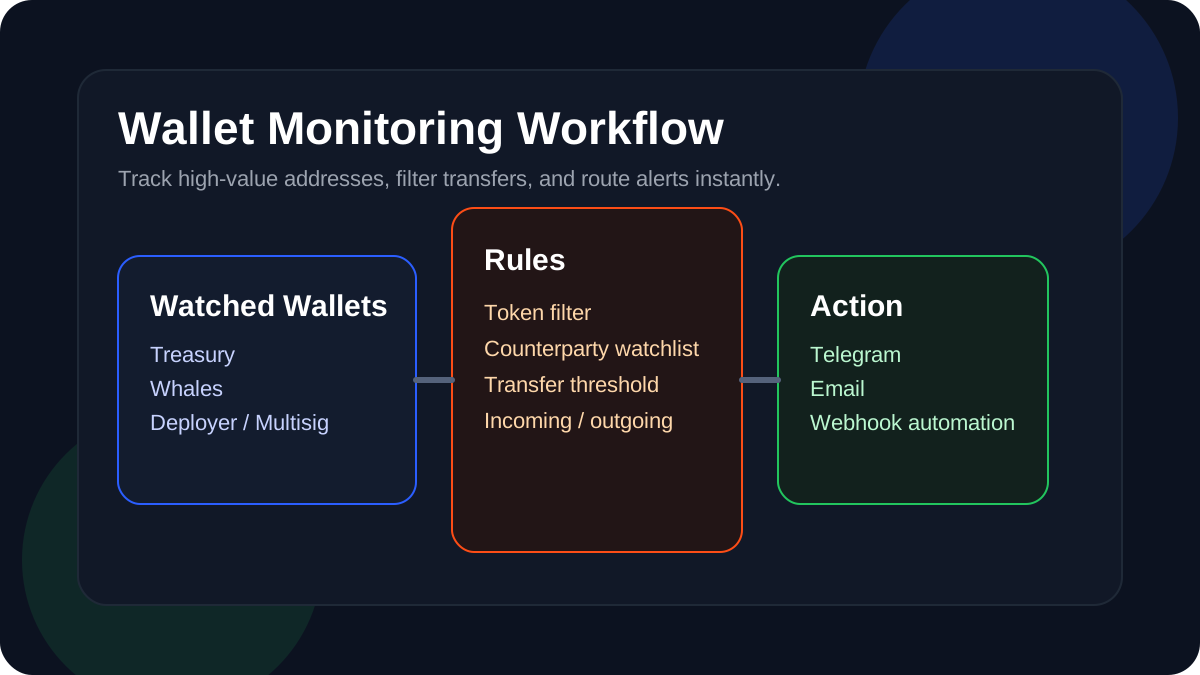
To monitor a crypto wallet in real time, you watch a specific address for incoming or outgoing transactions, add filters such as token or value thresholds, and route alerts to Telegram, email, or webhooks. This lets you track whale wallets, treasuries, deployers, or counterparties without manually checking explorers.
Introduction
Every blockchain wallet leaves a public trail, but raw transaction history is not the same as actionable monitoring.
If you care about a treasury wallet, a whale, a deployer, or a competitor, the goal is not to read every transfer after the fact. The goal is to know when something important happens right away.
What Wallet Monitoring Means
Wallet monitoring means tracking a specific address for the events that matter to you, usually transfers, approvals, counterparties, or protocol interactions.
- Large inbound or outbound token transfers
- Interactions with exchange deposit addresses
- New approvals or contract calls from a watched wallet
- Movements between treasury or multisig wallets
Which Wallets Are Worth Watching?
The best wallet monitoring setups are tied to a clear business or trading question.
Whale wallets
Track large holders whose moves can affect sentiment, liquidity, or short-term price behavior.
Treasury and multisig wallets
Protocol treasuries and multisigs often provide early signals about emissions, grants, market-making, or reserve changes.
Deployers and operators
Deployer and operator wallets can reveal upgrades, new contract launches, or ecosystem rollouts before marketing catches up.
How To Set Useful Wallet Alert Filters
The difference between a useful wallet alert and noise usually comes down to filters.
- Set a minimum transaction size so small transfers do not trigger alerts
- Limit tracking to the tokens you actually care about
- Track specific counterparties such as bridges, exchanges, or treasury wallets
- Separate high-priority alerts from informational activity
Delivery Channels And Workflows
Wallet alerts are only valuable if they arrive where action happens.
- Telegram for fast trader and operator notifications
- Email for summaries and lower-frequency operational review
- Webhooks for bot workflows, internal dashboards, or incident systems
If you need broader context on alert types, start with What Is an On-Chain Alert?.
Common Wallet Monitoring Mistakes
- Watching too many addresses before you know why each one matters
- Skipping thresholds and creating noisy alerts
- Tracking wallet activity without linking it to a response workflow
- Ignoring destination addresses such as exchanges or bridges
Try Pulsiv
Track the wallets that matter to your team
Set thresholds, choose your channels, and turn public wallet activity into actionable alerts in a few minutes.
FAQ
Frequently asked questions
Short answers to the common questions people ask when evaluating on-chain alerts and blockchain monitoring tools.
How do I monitor a wallet in real time?
Choose the wallet address, define the transfer or interaction conditions that matter, and send alerts to Telegram, email, or a webhook when the rule matches.
What can wallet alerts detect?
Wallet alerts can detect inbound and outbound transfers, large transactions, interactions with specific contracts, and transfers to or from key counterparties.
Why monitor treasury wallets?
Treasury wallets can reveal emissions, grants, liquidity changes, exchange transfers, or strategic treasury actions before they are widely discussed.
Do I need to run my own indexer to monitor a wallet?
No. A no-code alerting platform can watch the address for you and deliver notifications without custom infrastructure.
Related articles
More on blockchain monitoring
Related guide
What Is an On-Chain Alert? (And Why Traders Use Them)
Understand the broader alerting model before building wallet-specific workflows.
Related guide
Best Whale Alert Alternatives in 2026
Compare wallet tracking tools and broader alerting platforms for market-moving activity.
Related guide
How to Track DeFi Liquidity Additions and Removals
Combine wallet monitoring with liquidity alerts to understand where capital is moving next.