How to Set Up Ethereum Smart Contract Event Alerts
Smart contract event alerts let you watch emitted events, upgrades, ownership changes, and protocol actions so critical contract activity reaches your team immediately.
Direct answer
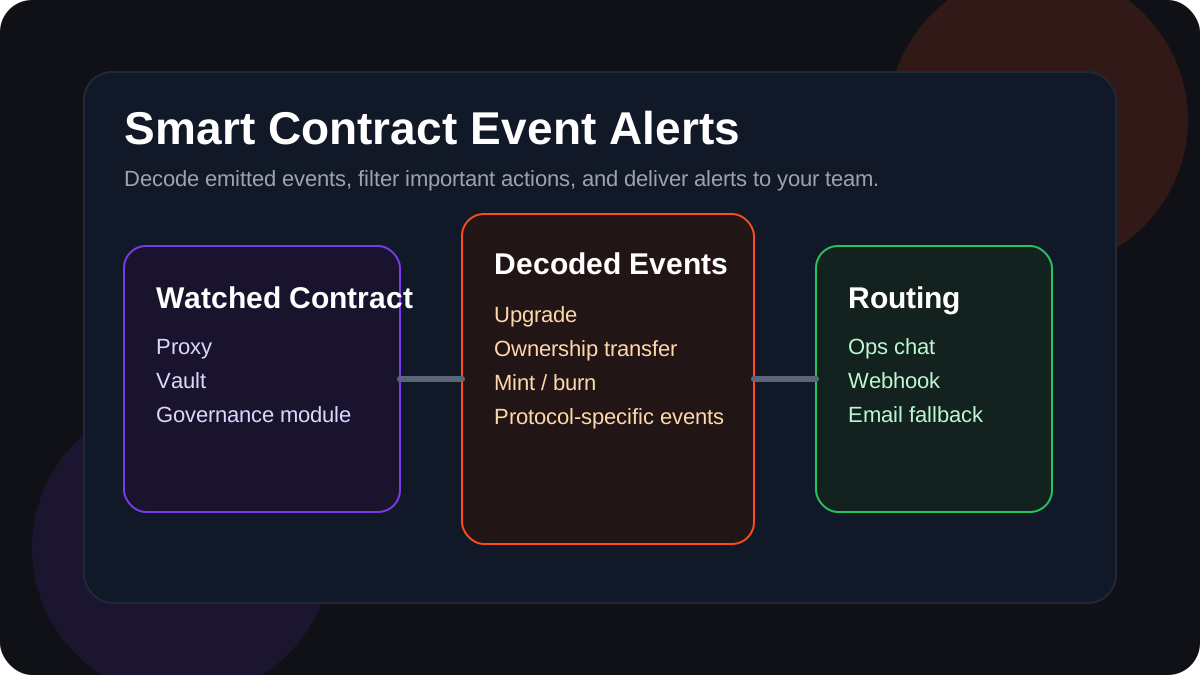
To set up Ethereum smart contract event alerts, choose the contract address, select the emitted events you need to watch, add filters such as addresses or thresholds, and send matching events to Telegram, email, or webhooks. This works for product monitoring, governance, upgrades, treasury flows, and security response.
Introduction
Ethereum smart contracts emit events for many of the actions that matter most to operators, traders, and security teams.
Those events are machine-readable, but they only become operationally useful when they are decoded, filtered, and delivered to the right place quickly.
What Contract Event Alerts Cover
- Ownership transfers and admin actions
- Proxy upgrades and implementation changes
- Protocol-specific events such as deposits, swaps, borrows, or votes
- Large ERC-20 or ERC-721 transfer events from a watched contract
Choose Events That Map To Decisions
Do not start by alerting on every emitted event. Start with the events that trigger a real response from your team.
- List the contract actions that would require action or investigation
- Match those actions to the underlying event names or signatures
- Add filters for users, vaults, values, or protocol addresses
- Route high-priority events differently from low-priority ones
Examples Of High-Signal Events
High-signal events are the ones tied to governance, upgrades, large value movement, or unusual contract interactions.
Upgrade and admin events
Proxy upgrades, role grants, ownership transfers, and timelock executions should almost always trigger alerts for critical contracts.
Value-moving events
Borrow, repay, swap, liquidation, mint, and withdrawal events often deserve thresholds so teams can detect unusual activity faster.
Delivery And Response
The alert should land where response happens. For most engineering and security teams, that means webhooks or chat tools rather than email alone.
If you are specifically monitoring contract-driven capital movement, pair these alerts with DeFi liquidity monitoring.
Mistakes To Avoid
- Alerting on every contract event instead of the few that drive decisions
- Skipping decoded output and leaving teams with raw logs only
- Ignoring admin or upgrade events because they happen less often
- Monitoring a contract without separating operational and security alert routes
Try Pulsiv
Monitor Ethereum contract events that matter
Track emitted events, add thresholds, and route important contract activity to the channels your team already monitors.
FAQ
Frequently asked questions
Short answers to the common questions people ask when evaluating on-chain alerts and blockchain monitoring tools.
What are smart contract event alerts?
They are notifications triggered when a watched contract emits specific events such as upgrades, deposits, transfers, or admin actions.
Why are contract event alerts useful?
They help teams detect important protocol activity, suspicious actions, or market-moving behavior faster than manual monitoring.
Do I need to decode Ethereum logs manually?
No. An alerting platform can decode event data into a readable format before sending it to your chosen channel.
Which contracts should I monitor first?
Start with contracts tied to upgrades, treasury flows, governance, mission-critical user funds, or security-sensitive admin functions.
Related articles
More on blockchain monitoring
Related guide
What Is an On-Chain Alert? (And Why Traders Use Them)
Start with the fundamentals if you are building your first contract monitoring workflow.
Related guide
How to Track DeFi Liquidity Additions and Removals
Follow pool-level changes alongside contract events for stronger protocol visibility.
Related guide
How to Monitor a Crypto Wallet in Real Time (No Code)
Combine contract event monitoring with treasury or operator wallet tracking.